How Designers Style Faux Flowers in Modern Interiors (Without Them Looking Fake)
I used to have a very clear opinion about faux flowers.
I thought they were either a last resort or a temporary fix. Something you bought when real flowers felt like too much work, too much money, or too much responsibility. They always seemed slightly… apologetic. Like decor that wanted to be something else.
And then I started paying closer attention to modern interiors designed by people who really know what they’re doing.
Not Instagram stylists chasing trends. Real designers. Architects. People who think in materials, proportions, and light.
And I realized something quietly radical was happening.
Faux flowers weren’t being used as substitutes anymore. They were being used as design elements.
Intentional. Sculptural. Calm. Completely at home in modern interiors.
This article is about how designers actually style faux flowers in modern interiors — not to trick anyone into thinking they’re real, but to make them belong.
Why Faux Flowers Used to Feel Wrong
The problem was never the flowers themselves.
It was how we used them.
For years, faux flowers were expected to perform. They had to imitate real bouquets, mimic freshness, pretend they’d been cut yesterday. And in trying so hard to look real, they ended up looking fake.
Glossy petals. Overstuffed arrangements. Too many colors fighting for attention like guests at an awkward dinner party.
In traditional interiors, that sometimes worked. In modern interiors? It felt off.
Modern spaces are quieter. More restrained. They rely on balance, negative space, and subtle contrast. Faux flowers styled the old way disrupted that calm.
Designers noticed. And instead of abandoning faux flowers altogether, they changed the rules.
The Shift: Faux Flowers as Objects, Not Decorations
Designers don’t ask, “How do I decorate this surface?”
They ask, “What does this space need to feel balanced?”
That shift changes everything.
In modern interiors, faux flowers aren’t there to announce themselves. They’re there to support the architecture, echo the palette, and soften hard lines — like a perfectly chosen throw pillow that pulls the room together without stealing the show.
This is why you’ll often see faux flowers used the same way designers use:
– sculptural ceramics
– table lamps
– books
– organic objects
They’re part of the composition, not the headline.
Designers Start With Shape, Not Flowers
This might be the single biggest difference between amateur styling and designer styling.
Designers don’t start by choosing flowers. They start by choosing a shape.
They look at:
– the height of the surface
– the negative space above it
– the visual weight of nearby furniture
– the flow of the room
Only then do faux flowers enter the conversation.
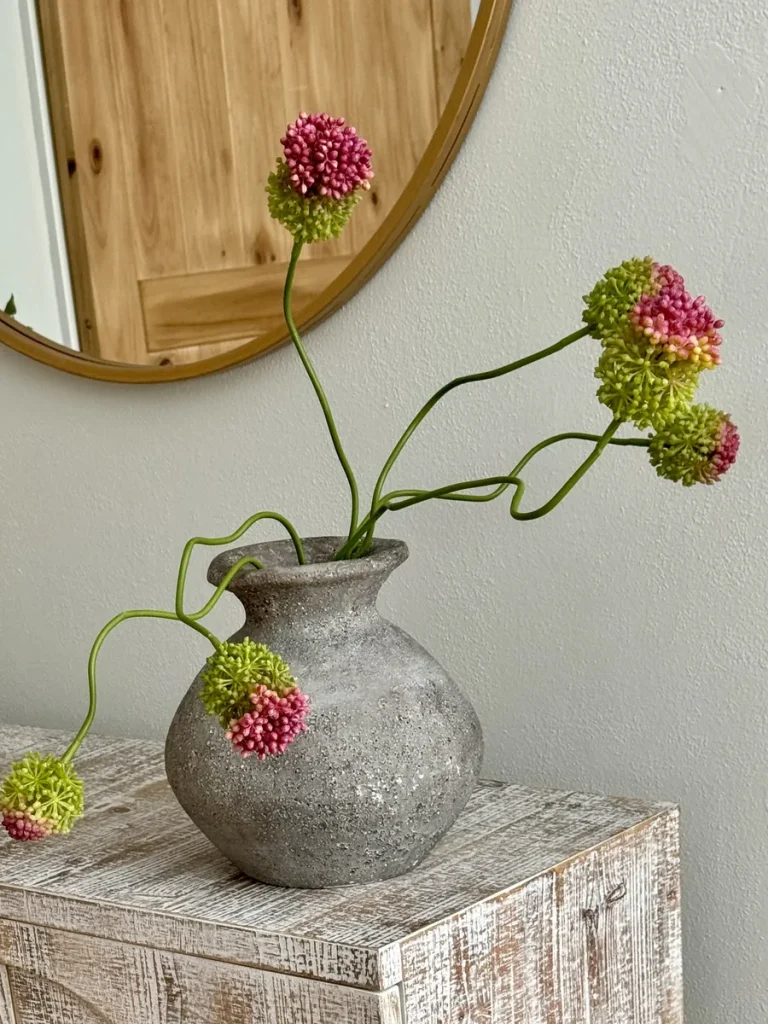
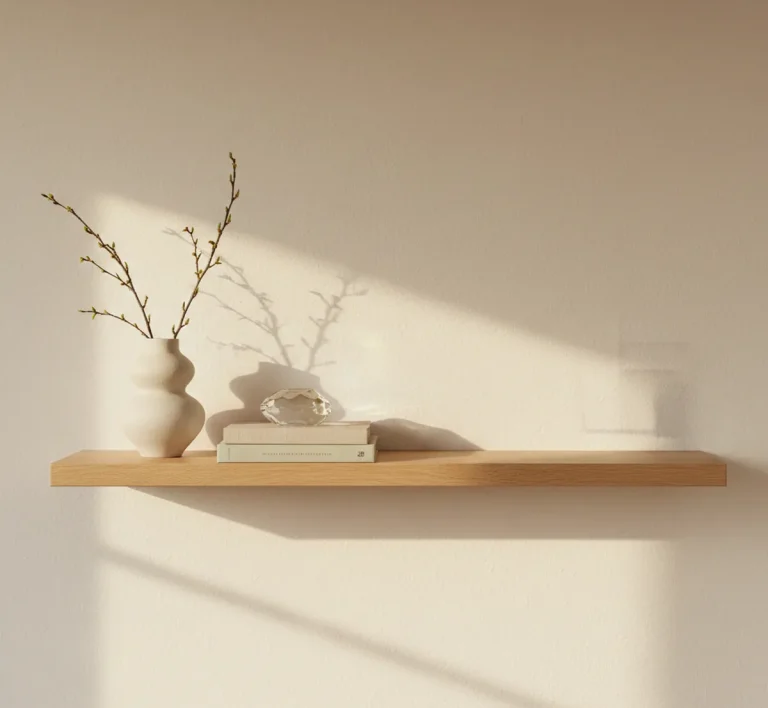
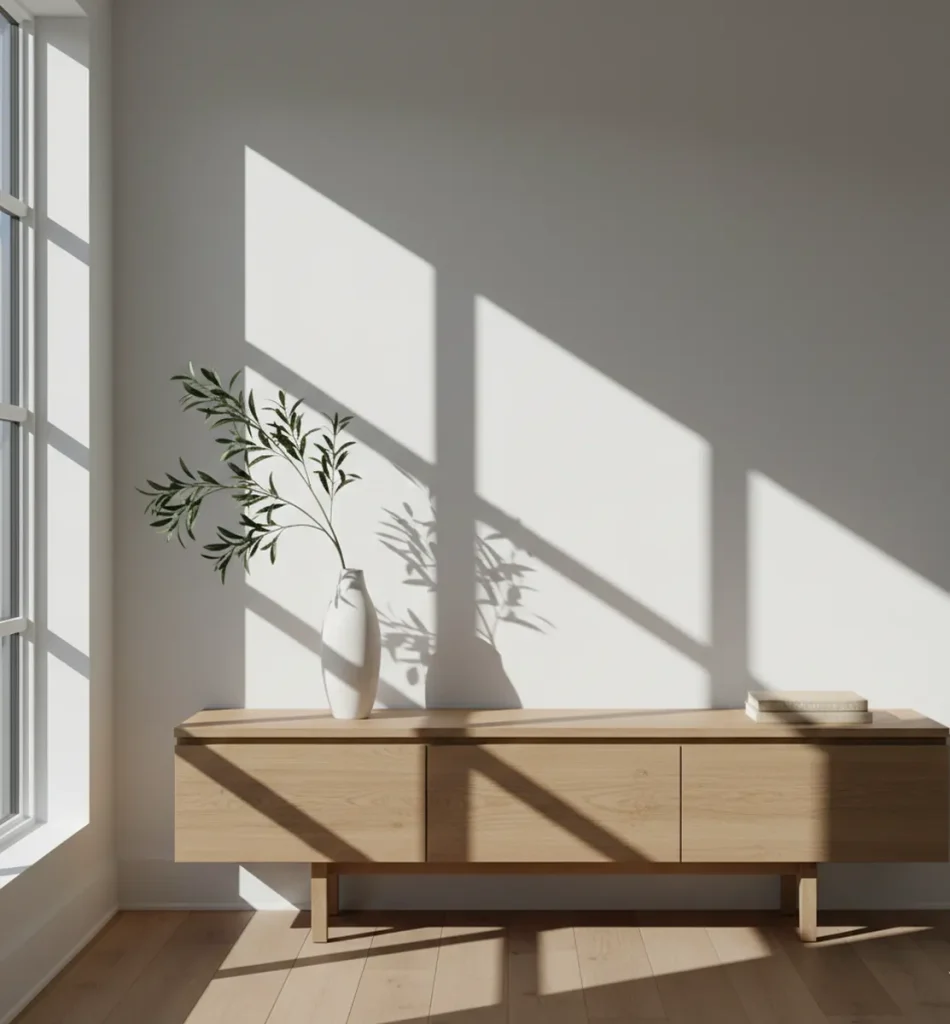
A single branch with a gentle curve can be more effective than a full arrangement. A tall, airy silhouette can balance a low credenza better than anything bulky or symmetrical.
In modern interiors, shape does the talking. The flowers are just along for the ride.
Why Minimal Faux Flower Arrangements Look More Expensive
There’s something counterintuitive about this, but it’s true.
The fewer stems you use, the more intentional the arrangement feels.
Designers often use:
– one type of flower
– one stem length
– one general direction
It’s restraint that makes faux flowers feel elevated — the same way a well-tailored coat looks better than one with too many details.
Color: Why Neutral Faux Flowers Dominate Modern Interiors
Modern interiors already work hard visually.
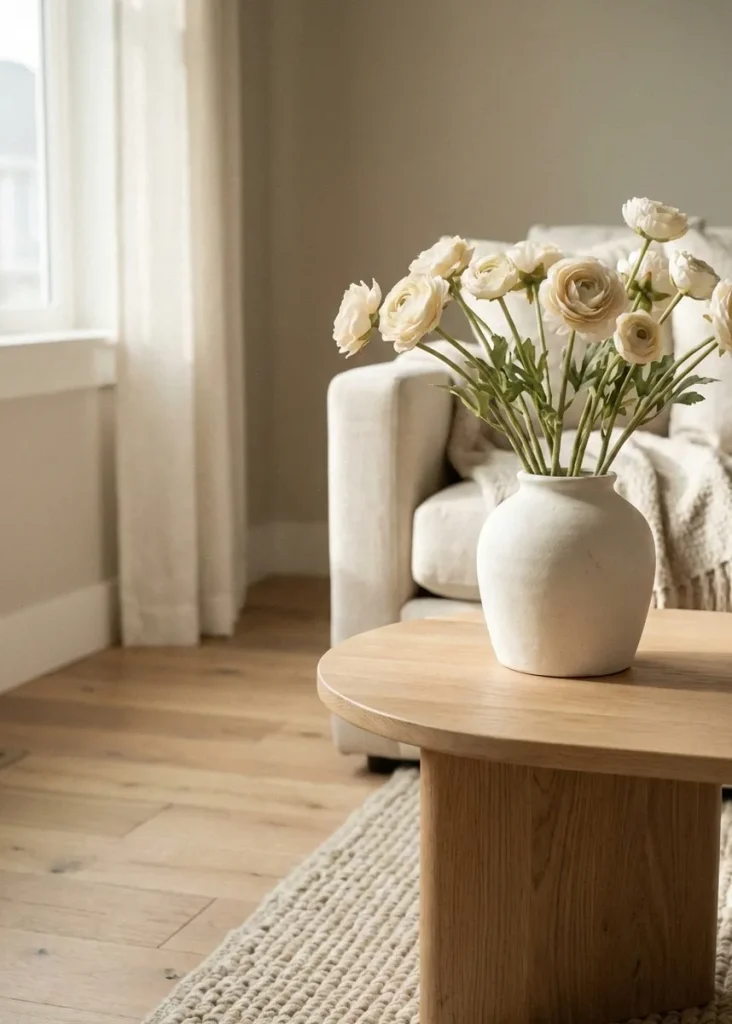
Concrete, wood, stone, plaster, linen — these materials have texture and presence. Faux flowers don’t need to compete.
This is why designers gravitate toward neutral faux flowers:
– soft whites
– warm ivories
– muted greens
– faded blush tones
– earthy browns
These colors reflect light without demanding attention. They act like punctuation, not exclamation points.
If you’ve ever felt like faux flowers looked “too much,” it’s often because the color arrived before the form did.
The Vase Matters More Than the Flowers
I say this gently, but clearly: you can ruin the best faux flowers with the wrong vase.
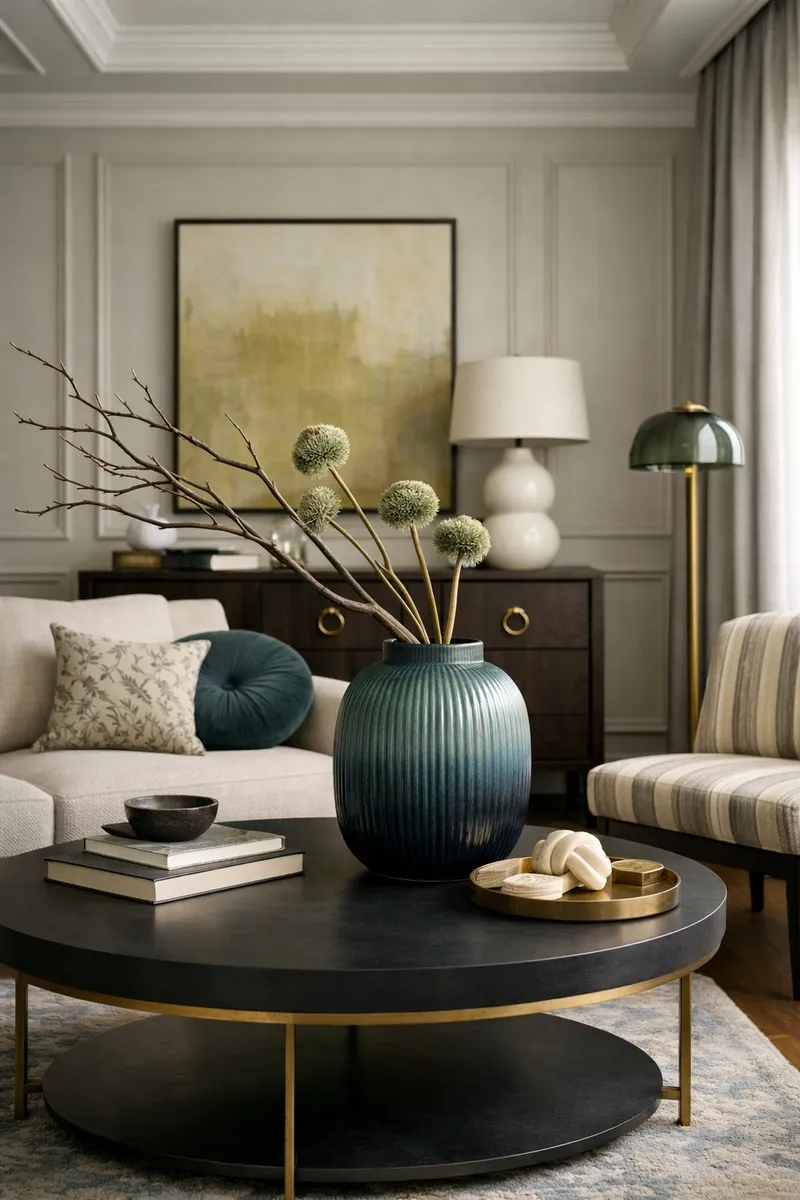
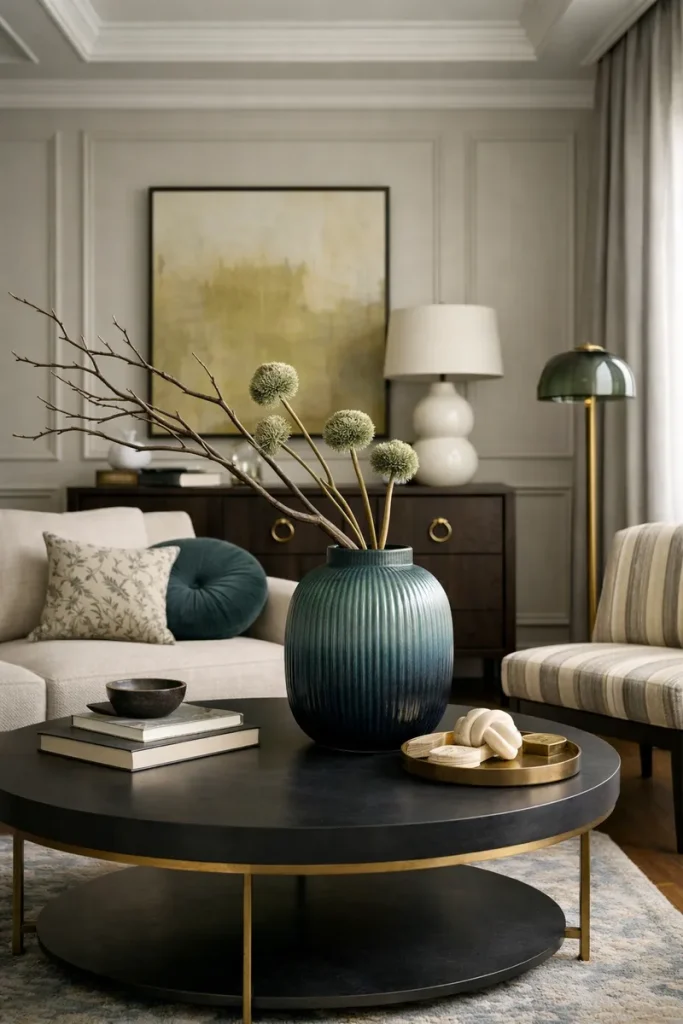
Designers choose vessels the same way they choose furniture — for weight, finish, and presence.
In modern interiors, you’ll see faux flowers paired with:
– matte ceramic vases
– stone or plaster vessels
– heavy glass with visible thickness
– handmade forms with subtle imperfections
The vase anchors the arrangement. It tells the flowers where they belong.
If the vase feels flimsy, shiny, or novelty-like, the entire arrangement follows it down.
Where Designers Actually Use Faux Flowers
This part surprised me when I first noticed it.
Designers aren’t afraid to use faux flowers in spaces where real flowers would feel inconvenient or fragile.
You’ll often see them:
– on console tables in entryways
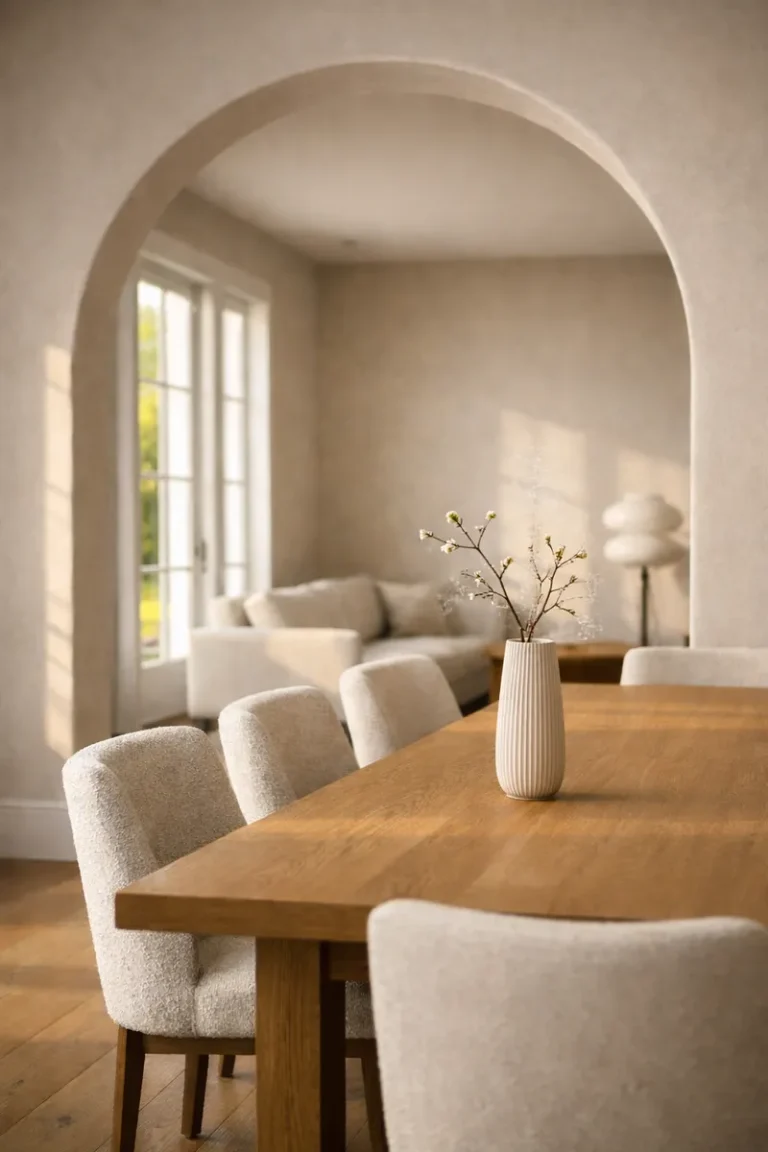
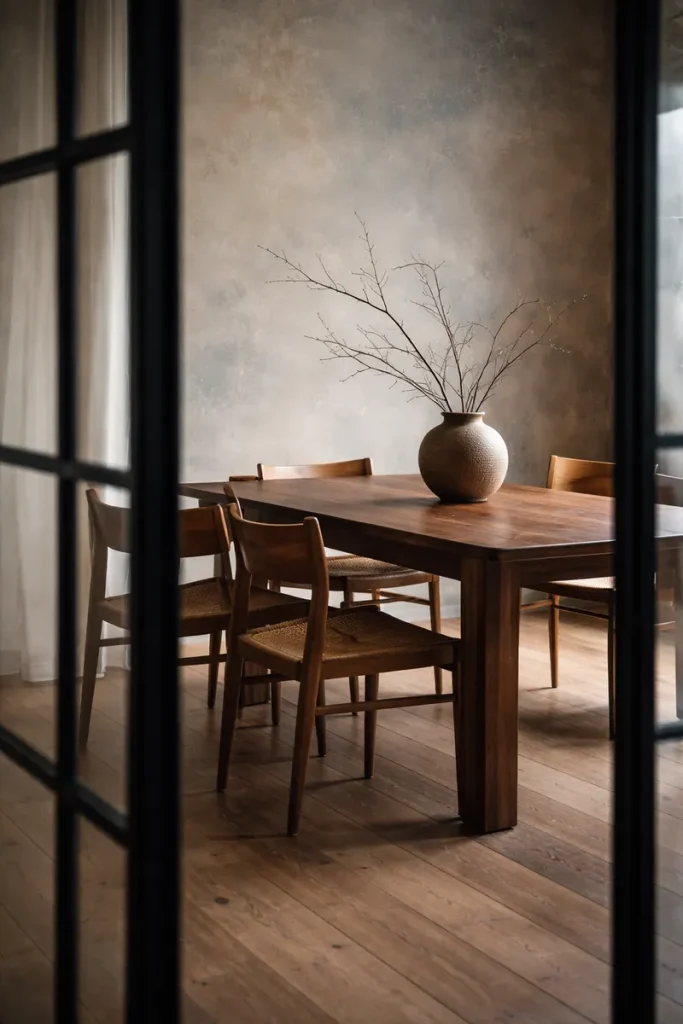
– on dining tables for everyday styling
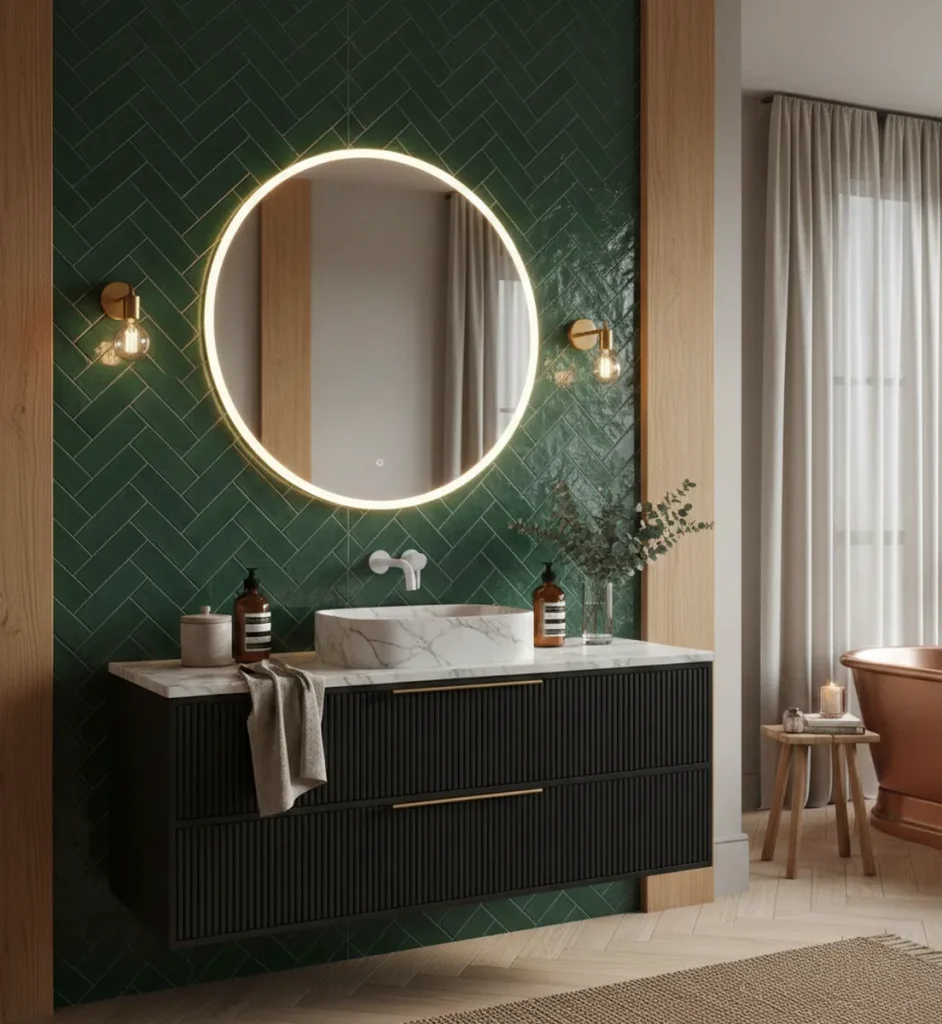
– in bathrooms where light is limited
– on open shelving, spaced far apart
– on nightstands or dressers
Because faux flowers don’t wilt, they maintain the intended silhouette — which is exactly what modern interiors rely on.
A Real Example: Styling Faux Flowers Without Trying Too Hard
A friend once asked me why her faux flowers “felt wrong,” even though they were expensive and realistic.
When I saw the arrangement, the issue was obvious.
Too many stems. Too many colors. A vase that didn’t belong in the room.
We removed half the flowers.
Switched to a heavier ceramic vase.
Turned the arrangement slightly off-center instead of placing it straight-on.
Suddenly, the flowers stopped performing. They started existing.
That’s the moment designers aim for.
Common Faux Flower Mistakes Designers Avoid
Designers aren’t magic. They just avoid a few predictable traps.
They don’t:
– mix too many flower types
– crowd arrangements with filler
– pair faux flowers with obviously cheap materials
– treat them as seasonal clutter
– aim for symmetry without intention
Modern faux flower styling is about editing, not adding.
Why Faux Flowers Work So Well in Modern Homes
Modern interiors value consistency.
They’re designed to feel calm on a Tuesday afternoon, not just styled for a photo.
Faux flowers support that because they:
– keep their shape
– don’t shed or wilt
– require no maintenance
– maintain visual balance over time
Designers often use them in homes where the goal is ease, not performance.
One Strong Faux Floral Moment Is Enough
This is another quiet rule designers follow.
One strong faux floral arrangement per space is usually enough.
Multiple small arrangements dilute the effect and start to feel decorative instead of architectural.
One intentional moment feels confident. Like the room knows what it’s doing.
Final Thought: Faux Flowers Don’t Need to Be Real to Be Right
The irony is this:
Faux flowers look their best when they stop trying to pass as real.
When they’re chosen for shape, weight, and balance — not realism.
In modern interiors, faux flowers aren’t pretending.
They’re participating.
And when they’re styled with intention, they belong exactly where they are.