Minimalist Decor with Faux Flowers: How I Made My Home Feel Calm (Not Cold) and Stopped Babysitting Bouquets
I didn’t become “a minimalist” overnight. It happened the way most real lifestyle changes happen—slowly, a little at a time. I cleared one drawer. Then one shelf. Then I realized I wasn’t just organizing… I was chasing a feeling. I wanted my home to feel like a deep breath when I walked in, not like a to-do list with throw pillows.
But I ran into a problem I didn’t expect: once I stripped things back, my space looked clean… and also kind of empty. Not peaceful-empty. More like “did I just move in?” empty.
And flowers—my favorite way to add softness—were suddenly turning into a recurring chore. I love real blooms, truly. But fresh flowers also meant planning, buying, trimming, changing water, wiping rings off surfaces, and tossing them out when they inevitably started dying on day three.
So I did something I used to roll my eyes at. I tried minimalist decor with faux flowers.
Not the shiny, plastic stuff that screams “craft aisle.” I mean the realistic, matte, slightly-imperfect stems that you have to touch to be sure. The kind that looks like it belongs in a calm home, not on a sad office reception desk.
The Minimalist Problem Nobody Warns You About: Less Can Start to Feel Like Nothing
Minimalism looks amazing in photos—white walls, clean lines, natural wood, maybe one sculptural vase. But in real life, a minimalist room can feel unfinished if you don’t add back the right kind of “life.”
I learned this the hard way after a big decluttering weekend. I sat down with coffee, looked around, and thought: “Okay… it’s tidy. But why does it feel a little… sterile?”
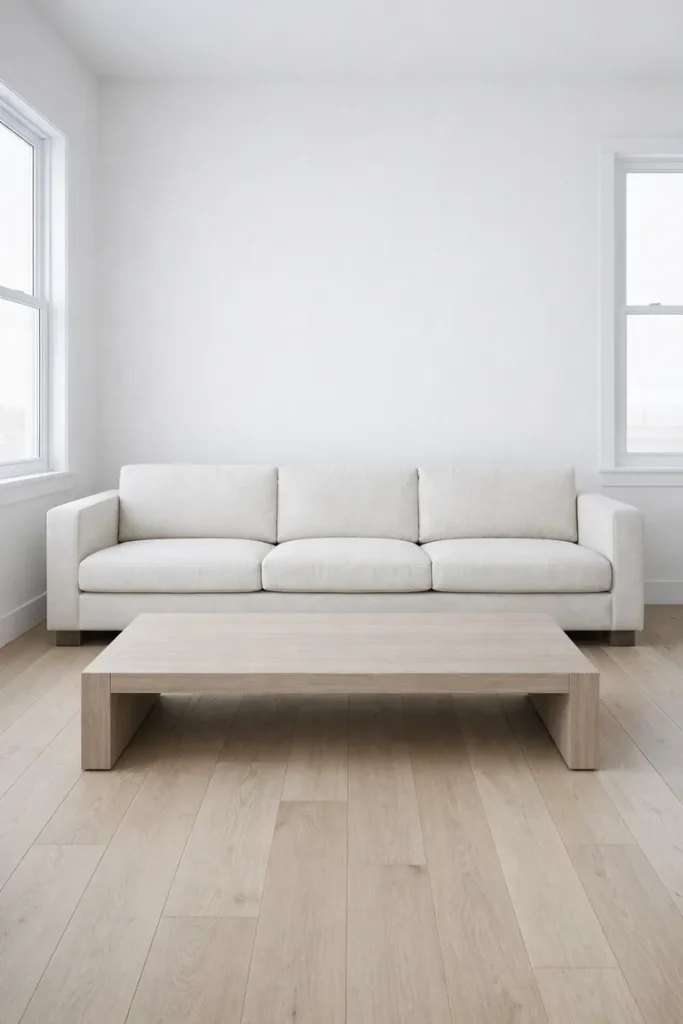
What I was missing wasn’t “stuff.” It was warmth: texture, organic shapes, something soft for the eye to land on.
That’s the sweet spot where faux flowers can actually make sense. When you use them like a single intentional design element—not like a bunch of random decor trying to fill space.
Architectural Digest talks about the importance of natural texture and organic details in minimal interiors, so spaces don’t feel cold.
What Changed My Mind: The “I Can’t Tell They’re Fake” Moment
I was at a friend’s apartment and noticed this perfect little arrangement—eucalyptus, soft greens, nothing loud. It looked expensive and effortless. I complimented her, and she laughed and said, “It’s faux.”
I didn’t believe her until I touched it.
That moment cracked something open for me: maybe “fake” didn’t automatically mean “cheap.” Maybe my obsession with “real only” was more about the story I’d been told than what actually worked in a home.
The Real Benefit Isn’t Just Looks—It’s Mental Space
Let me be honest: switching to faux wasn’t only about saving money (though that part is real). It was about not having one more ongoing responsibility in my house.
Fresh flowers are beautiful, but they’re also temporary. They demand attention. They create a quiet little deadline: enjoy me now, because I’m going to turn on you soon.
With artificial flowers that look real, my home stays consistently calm and styled without me constantly “resetting” it.
The New York Times has even covered how high-quality faux florals have grown in popularity as people lean toward longer-lasting, low-waste decor.
How to Choose Faux Flowers for a Minimalist Home Without Them Looking Cheap
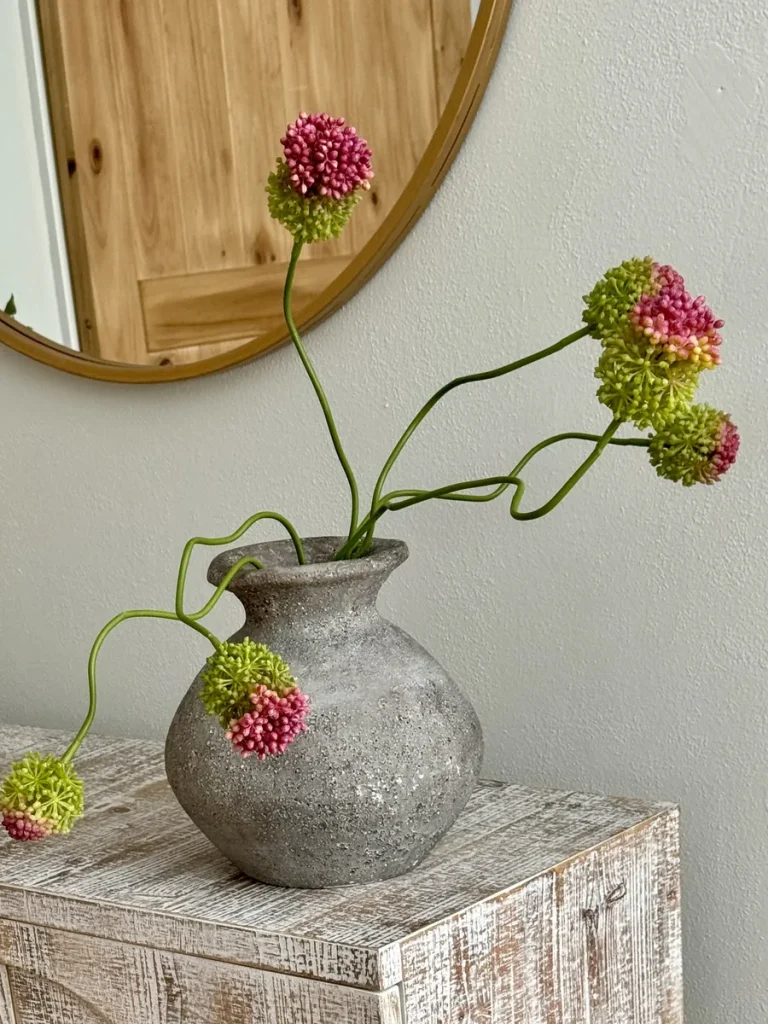
I learned quickly that minimalist decor is unforgiving. When you don’t have clutter, every single object gets more attention—so faux flowers have to hold up at close range.
1) Look for Matte Texture and Slight Imperfections
Real flowers aren’t perfect. Petals curve oddly. Color fades slightly at edges. Leaves aren’t the same exact shade on both sides. The more “uniform” a faux stem is, the more fake it reads.
If a flower is glossy, neon, or stiff like plastic—skip it. Even if it looks “fine” in a store, it will look wrong at home in natural light.
2) Keep the Color Palette Quiet
In minimalist spaces, color feels almost architectural. I stick to:
White, cream, ivory (peonies, roses, ranunculus)
Muted greens (eucalyptus, olive branches, sage)
Soft, dusty tones (blush, muted mauve, pale coral)
Bright primary colors can work, but only if your home already has that energy. In a calm neutral space, they can feel like someone turned the volume up too high.
3) Choose Fewer Stems, Better Stems
This is my non-negotiable rule: one realistic arrangement beats five mediocre ones.
Minimalist decor with faux flowers works best when you treat the flowers like a focal point—one sculptural, thoughtful moment—rather than scattering little bouquets everywhere.
Where Faux Flowers Work Best in Minimalist Interiors
These are the places where faux flowers have made the biggest difference in my home without adding clutter.
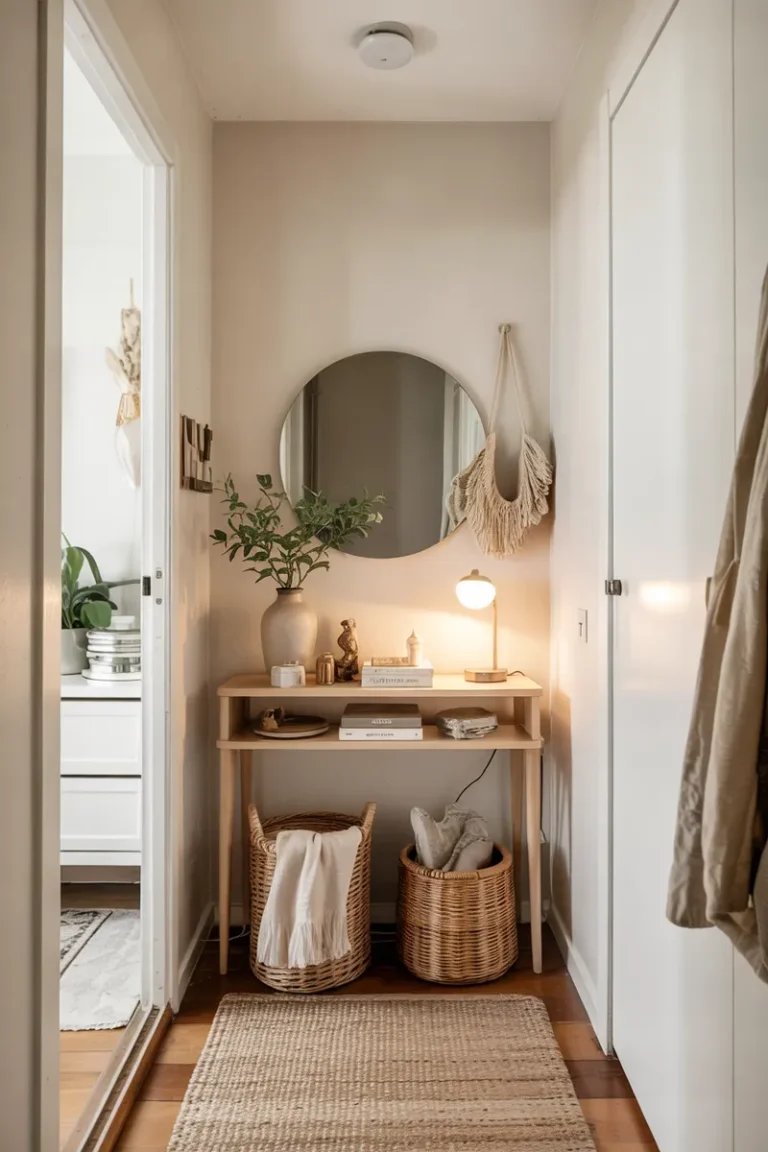
Minimalist Entryway: The “Welcome In” Spot
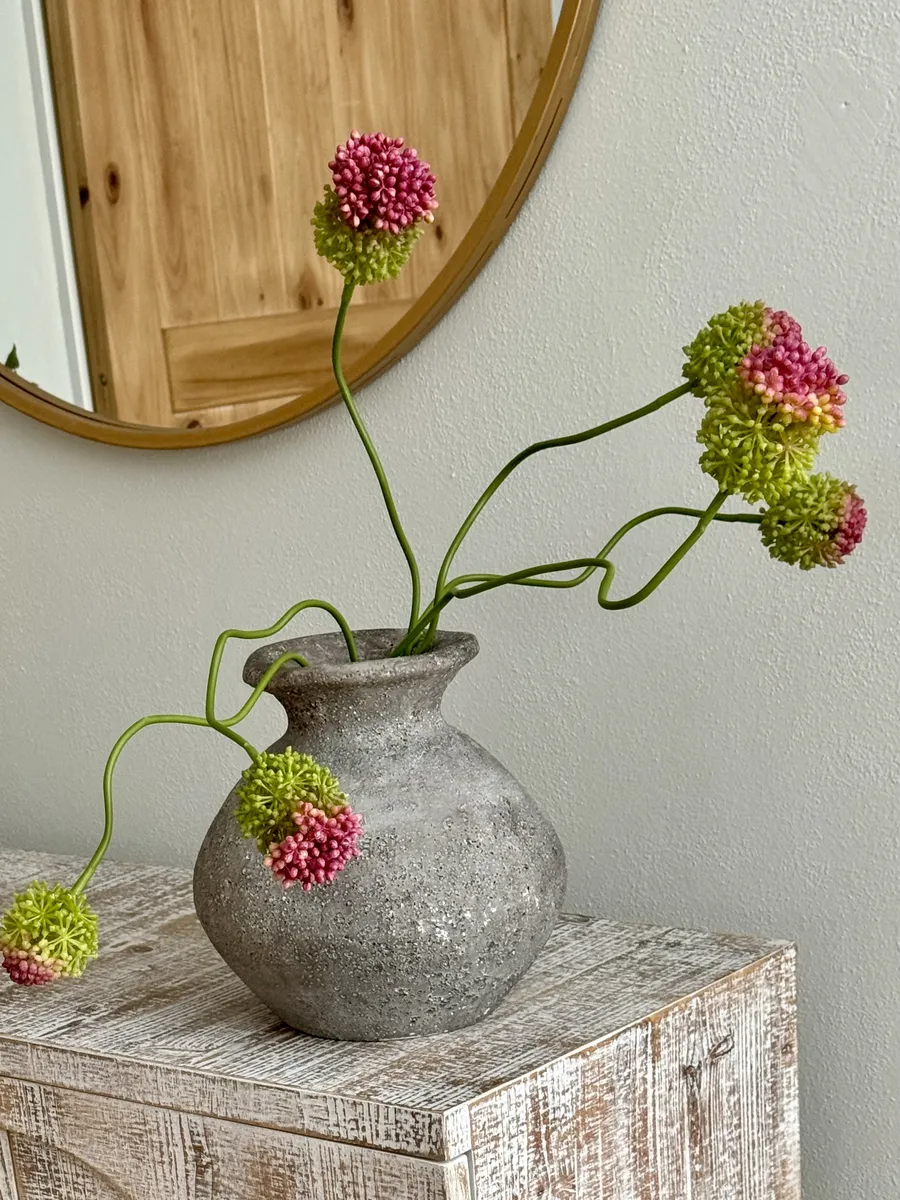
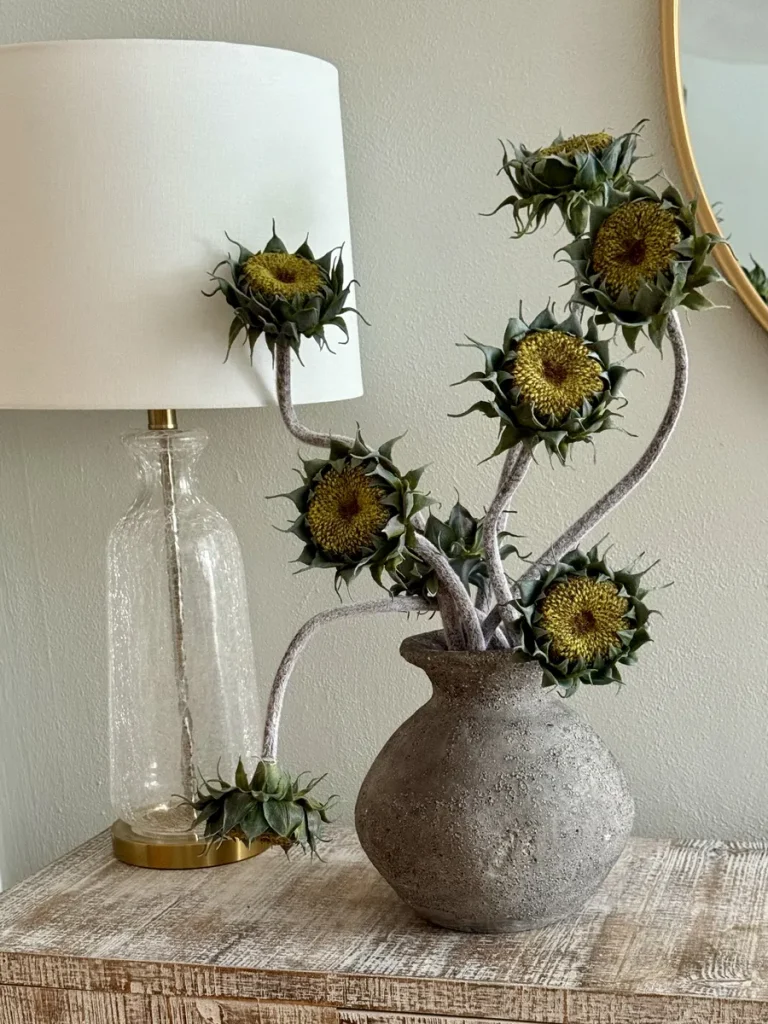
An entryway sets the emotional tone. A tall vase with a few branches or airy stems adds height and softness without taking over the surface.
I love pussy willow, olive branches, or a simple faux branch arrangement here. It feels calm and intentional—and honestly, it’s one of those little details that makes people pause in a good way.
Minimalist Living Room: Softness Without Visual Noise
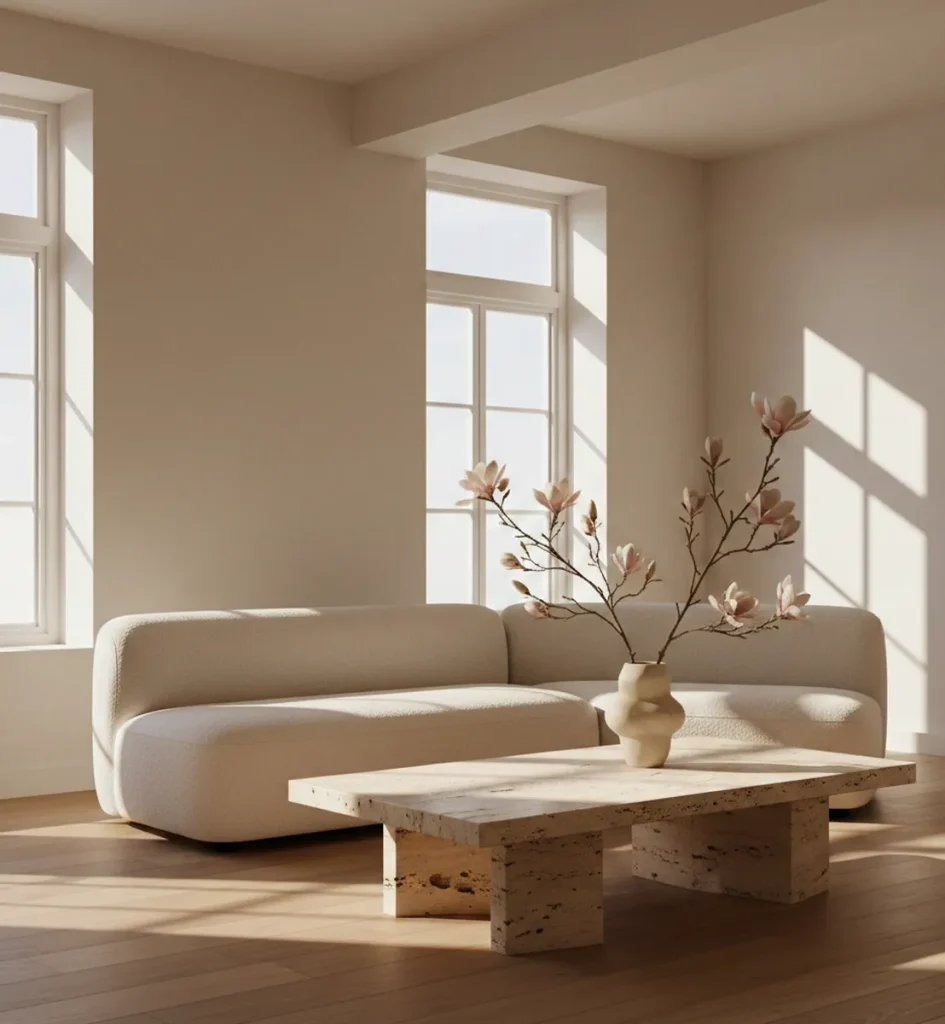
Living rooms can start to feel a bit severe if everything is straight lines and neutrals. A small arrangement on a coffee table breaks that up gently.
I keep mine low (so it doesn’t block conversation) and simple (so it doesn’t compete with art or lighting). Think three to five stems, not a giant bouquet.
Minimalist Bedroom: Calm, Not Fussy
I used to think flowers in a bedroom felt too “styled.” But one simple stem on a nightstand can make the whole room feel finished without feeling busy.
My favorite bedroom move: one dramatic leaf (like monstera) or a single soft bloom in a small ceramic vase. It’s quiet, but it changes the mood.
Kitchen: The Practical Win
Kitchens can be rough on real flowers—heat, steam, chaos. Faux stems don’t care.
I like faux herbs (rosemary, lavender, sage) in a crock, or a small greenery arrangement on a windowsill. It makes the kitchen feel lived-in without becoming another thing I have to maintain.
Bathroom: Humidity-Proof Beauty
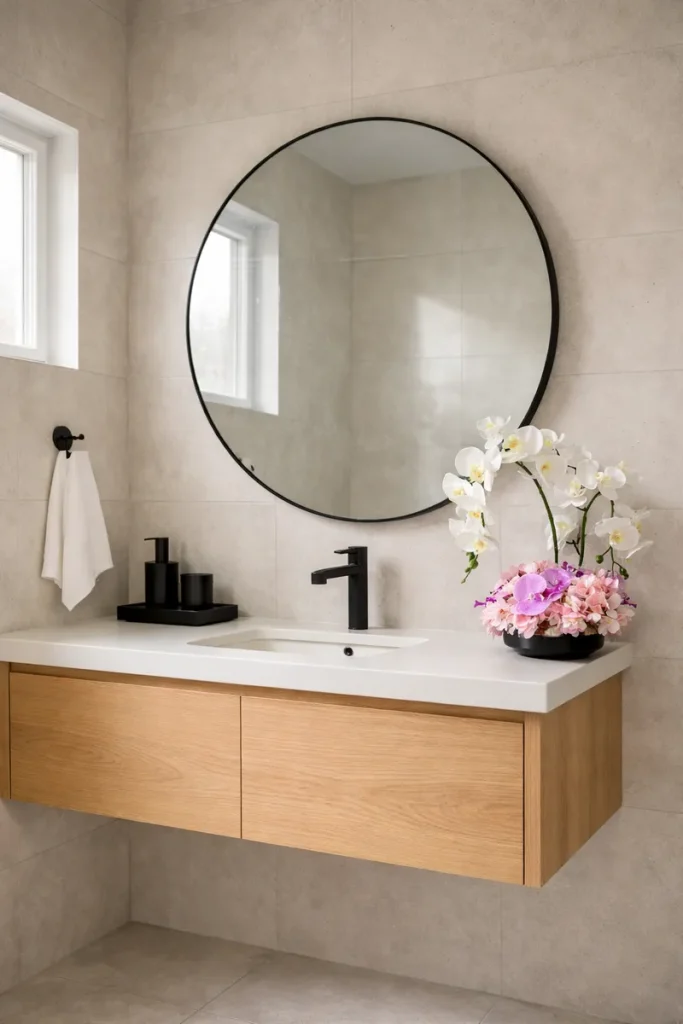
Bathrooms are underrated when it comes to decor. A tiny vase with a few faux tulips or greenery instantly makes it feel more “intentional,” especially in a minimalist bathroom where you’re not using a lot of accessories.
The Vase Matters More Than People Think
I’ll say this bluntly: even beautiful faux flowers can look cheap in the wrong container.
In minimalist decor, the vase is basically half the design. I look for:
Simple forms with clean lines
Materials that feel real and substantial (ceramic, glass, stone, concrete)
Neutral or soft tones
Good proportions (usually the vase is about one-third to one-half the total height of the arrangement)
If the flowers disappeared, the vase should still look good sitting there by itself.
How I Keep Faux Flowers Minimal (Without Turning Them Into Clutter)
I’m not strict, but I do have a few “house rules” that keep faux flowers feeling calm instead of busy.
1) One Room, One Moment
I don’t do multiple arrangements in a small room. If I already have flowers on a coffee table, I’m not adding another bouquet on the side table. That’s how “minimal” turns into “decor collection.”
2) I Leave Negative Space on Purpose
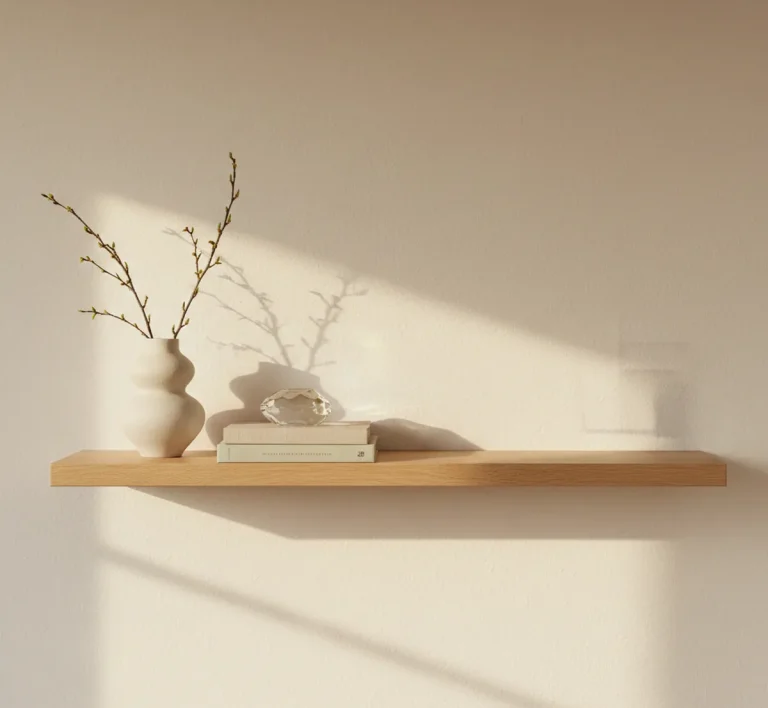
I don’t cram a vase into a corner with a bunch of other objects. I let it breathe. Space is part of the design.
3) I Remove a Stem When It Feels “Too Much”
If something looks off, it’s usually not because I need more. It’s because I need less. I take one stem out and suddenly it looks expensive and intentional again.
4) I Dust Them (Yes, This Matters)
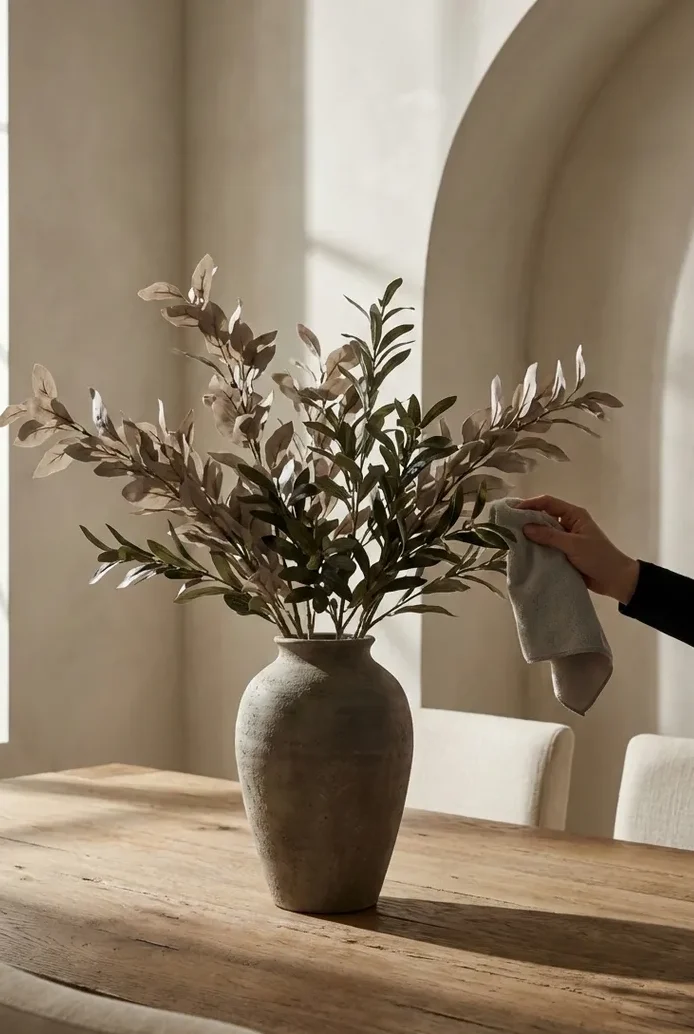
Here’s the unglamorous truth: faux flowers collect dust, and dusty flowers look sad. I dust mine every couple weeks with a microfiber cloth or a handheld duster. It takes two minutes and makes them look brand new again.
A Quick Real-Life Example: When Less Finally Felt Like Enough
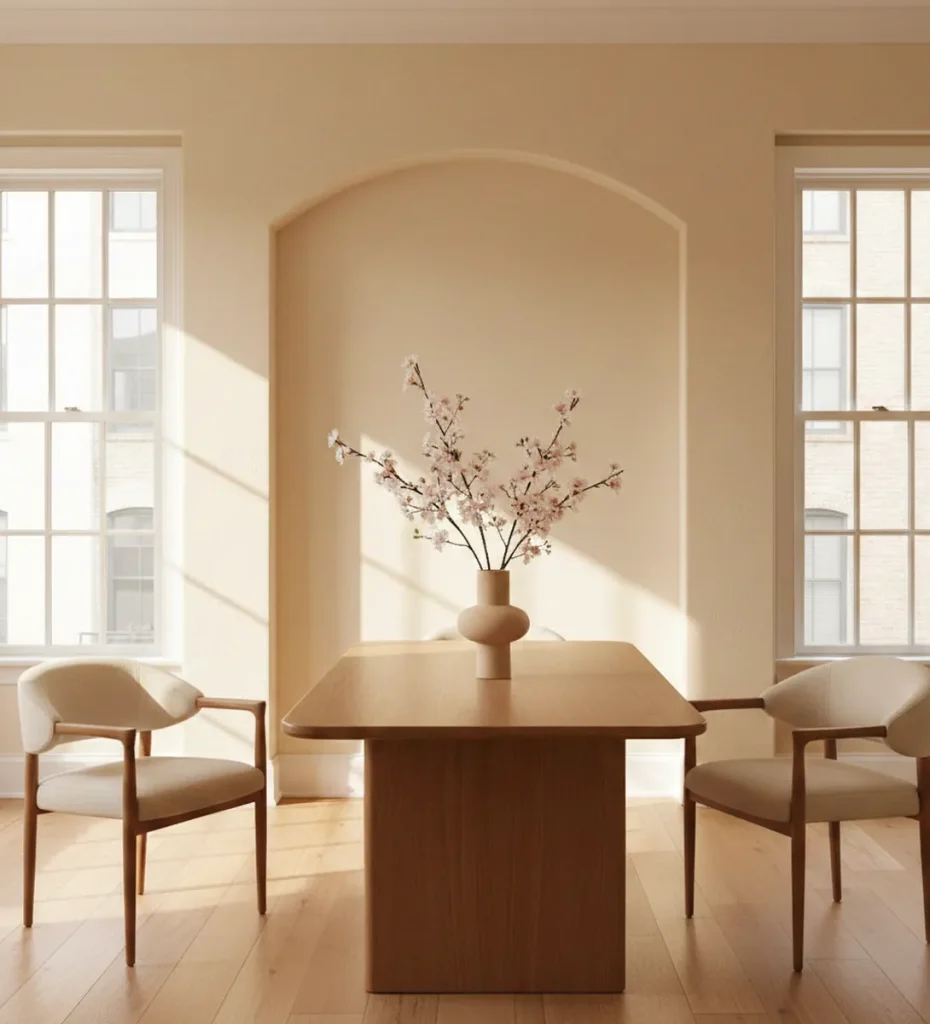
Last spring I reset my dining area. I removed the runner, the extra candles, all the seasonal little things. I left the table bare except for one off-white ceramic vase with faux peonies.
At first, I kept thinking I should add something else. A bowl. A stack of books. Anything.
But after a few days, I noticed what I hadn’t noticed in a while: morning light, the grain of the wood, how calm the room felt. The flowers didn’t “fill” the space—they just gave it one soft focal point.
That’s what minimalist decor with faux flowers does when it’s done right. It doesn’t add noise. It adds a quiet kind of warmth.
Are Faux Flowers “Dishonest”? My Honest Take
This used to bother me more than I wanted to admit. I grew up thinking fresh flowers meant you cared, and fake flowers meant you gave up.
But now I see it differently: choosing decor that fits your actual life isn’t dishonest—it’s practical.
I’m not trying to convince anyone I have a weekly flower budget and unlimited time to keep things perfect. I’m trying to create a home that feels calm and beautiful on a random Tuesday, not just the day after I buy a bouquet.
And honestly? Once I stopped worrying about what “counts,” decorating got a lot easier.
What I Spent (And Why It Ended Up Being Cheaper)
I’ll keep this simple: when I switched to faux, I set a small budget and bought a few staples I could reuse.
I spent a few hundred dollars on a handful of vases and realistic stems (greens + a few white blooms). That was over a year ago, and I’m still using the same pieces—just rotating them by room and season.
When I compare that to what I used to spend on fresh flowers, it’s not even close. But the bigger win for me wasn’t money—it was not having to manage flowers like a weekly task.
Seasonal Rotation: How Faux Flowers Stay Feeling Fresh
This is one of my favorite parts: I can swap stems with the seasons without buying new decor constantly.
Spring: tulips, cherry blossom branches, airy stems
Summer: greenery-heavy (eucalyptus, olive, ferns)
Fall: pampas grass, dried-looking wheat stems, muted warm tones
Winter: bare branches, white blooms, simple evergreen
It takes 15–20 minutes and makes my home feel updated without adding clutter.
Minimalism Doesn’t Have to Feel Lifeless
If you love minimalist style but sometimes worry your home looks a little too bare, you’re not imagining it. Minimal spaces need softness—just not the kind that turns into clutter.
Minimalist decor with faux flowers has been the easiest way for me to add warmth without adding work. One good arrangement can make a room feel finished. One simple stem can make a corner feel intentional. And the best part is it stays that way.
If you’re curious, start small: one vase, one stem, one spot in your home that feels a little empty. Try it for two weeks. See how it feels.
Sometimes “less” really is more—especially when it’s chosen on purpose.